
Why Maple Grove Decks Heave and Shift Over Winter
A Maple Grove deck heaves over winter when its footings sit above the frost line and freezing soil pushes them up. The Minnesota State Building Code sets a 42-inch footing minimum for this part of the state, and a footing shallower than that rides the frost up every winter and drops every spring. A licensed Twin Cities home inspector has called out some of the worst deck frost heave he has seen right here in Maple Grove. Here is how the movement happens and how to stop it for good.
The Short Answer
A deck heaves because water in the soil freezes, expands, and lifts any footing it can reach. A footing poured below 42 inches sits under the frost, so the freezing soil has nothing to grab. A footing poured at 18 or 24 inches sits inside the frost zone, so it gets lifted every winter. The fix is not to re-level the deck but to re-pour the footings below the frost line.
How Frost Heave Lifts a Deck
Frost heave works through water, not cold alone. When the ground freezes, the water in the soil turns to ice and expands, and that expansion pushes outward in every direction, including up. A footing buried inside the freezing zone gets gripped by that ice and lifted along with the surrounding soil.
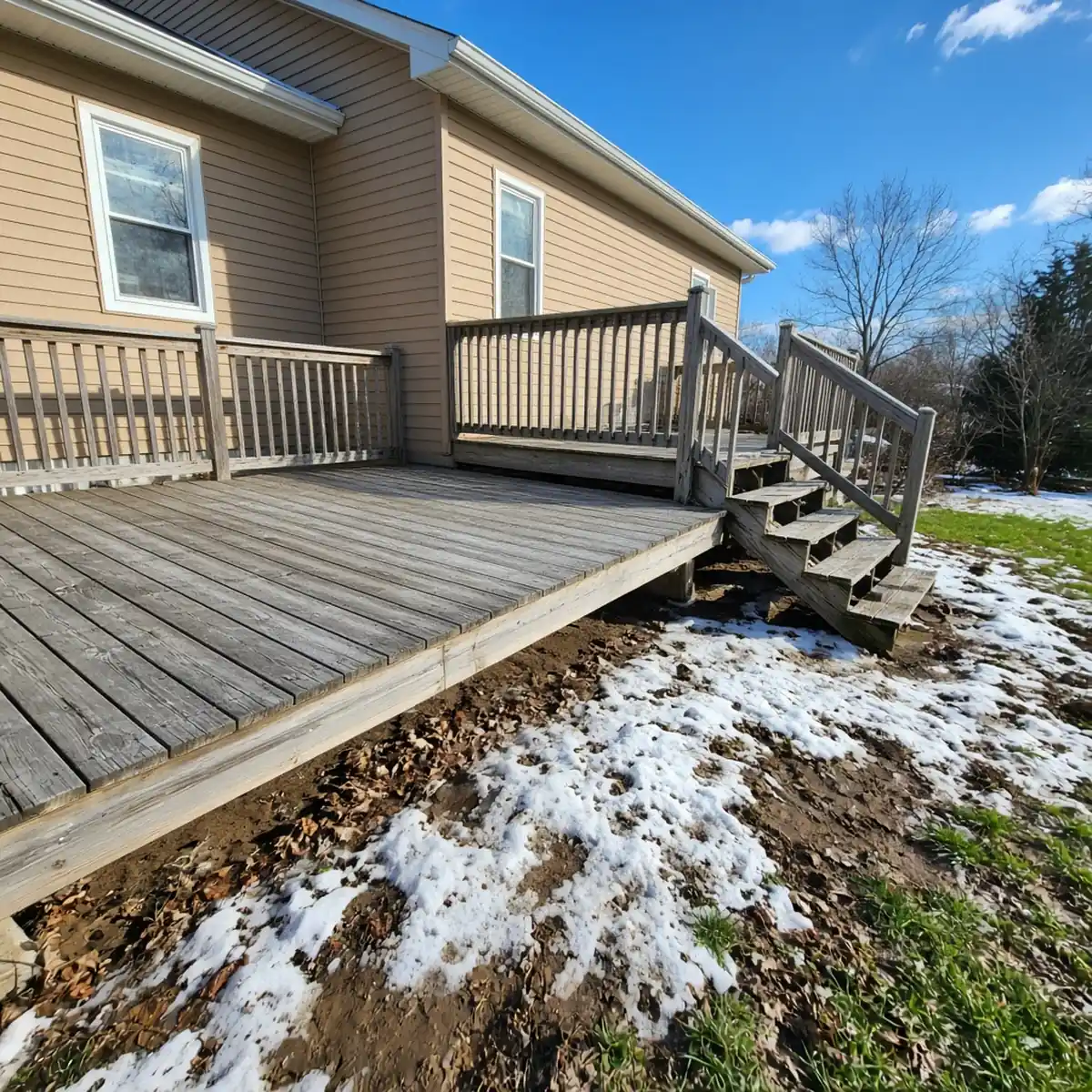
The lift is rarely even. One footing moves more than another, so the deck does not rise straight up; it racks. That is why a heaved deck shows as a corner out of level, stairs that no longer meet the landing square, and a ledger straining at the house. In spring the frost leaves, the soil settles, and the deck drops again, rarely back to where it started.
Why Maple Grove Ground Heaves Hard
Maple Grove sits in the southern-Minnesota frost zone, where the state code sets the footing minimum at 42 inches, and the local soil heaves hard enough that a Twin Cities inspector singled out the city for some of the worst deck frost heave he has documented. The depth of the freeze here is the reason the code sets the footing that deep.
Snow plays a part too. The nearest official station, Minneapolis–St. Paul International Airport, records about 51 inches of snow a year under NOAA's 1991–2020 normals. That snow load presses down on the deck surface all winter while the frost pushes up from below, so an under-built deck gets worked from both directions. The numbers behind the frost and snow are laid out in the Minnesota deck frost-depth and snow-load reference.
How to Tell Frost Heave From Rot
Frost heave and rot both make a deck feel wrong, but they show differently.
| Sign | Frost heave | Rot |
|---|---|---|
| Timing | Worse in winter and spring, better in fall | Constant, year-round |
| Location | Footings, posts, stairs out of level | Ledger, post bases, under bottom step |
| Wood condition | Frame still solid | Soft, spongy wood |
| Fix | Re-pour footings below 42 inches | Replace the rotted members |
A deck can have both at once, which is why a repair crew checks the footings and probes the wood before deciding what the deck needs. See the full list of signs a deck needs repair or replacement.
How to Fix a Heaved Deck for Good
Fixing a heaved deck means getting the footings below the frost line, not shimming the posts. First, the crew inspects which footings have moved and how far the deck is out of level. Second, the failed footings are dug out and re-poured below 42 inches on undisturbed soil. Third, the deck is brought back to level on the new footings. Finally, the ledger, railings, and stairs are checked and re-secured.
Shimming or re-leveling without touching the footings is why a "fixed" deck is back out of level the next spring. The movement lives in the footing, so the fix lives there too. For a deck too far gone to re-foot, deck replacement rebuilds it on proper footings. Call 763-298-9416.
Frequently Asked Questions
Deck footings need to reach at least 42 inches in Maple Grove, the Minnesota frost-line minimum for the southern part of the state, to stop heaving. A footing below the frost line sits under the freezing soil, so the frost cannot grip and lift it. Footings shallower than 42 inches sit inside the frost zone and heave every winter, which is the single most common cause of a deck going out of level here.
A heaved deck can be saved if the frame and boards are still sound and only the footings have moved, by re-pouring the failed footings below 42 inches and re-leveling the deck. Replacement becomes the better call only when the framing has rotted or the whole deck sits on footings too shallow to save. An inspection of the footings and framing decides which path fits.
A deck that moves in winter but looks fine in summer is showing frost heave, not rot. In winter the soil freezes and lifts shallow footings, so the deck racks; in summer the frost is gone and the deck settles closer to level. The seasonal pattern is the giveaway. A rotted deck, by contrast, stays soft and out of level year-round.
Adding concrete on top of a footing does not stop heaving, because the problem is depth, not mass. A footing has to extend below the 42-inch frost line so the freezing soil cannot reach it. Piling concrete higher leaves the base inside the frost zone, where it still gets lifted. The only lasting fix is to re-pour the footing to the proper depth on undisturbed soil.
Not every deck heaves. A deck built on footings below the 42-inch frost line on undisturbed soil stays put through the freeze-thaw, which is the whole point of the code depth. Decks that heave are the ones built on shallow footings, the older decks poured before the depth was routinely inspected. A properly footed deck can go decades without moving.
Call Now to Fix a Heaved Deck in Maple Grove
If your deck is heaving, shifting, or out of level after winter, call 763-298-9416 to reach a deck builder in Maple Grove. See deck builders in Maple Grove for how the work is done. Call 763-298-9416.