Deck Railings in Maple Grove, MN — Code-Height Guards in Metal, Composite, and Cable
Deck railings in Maple Grove, MN have to meet the code before they meet the eye: a guard at least 36 inches high on any deck more than 30 inches above grade, with baluster gaps a 4-inch sphere cannot pass. Local installers set metal, composite, or cable railing on posts anchored into the deck frame, not the decking surface, so the guard holds under a lean or a fall. The look is the homeowner's choice; the height and spacing are the code's. Call 763-298-9416 to reach a deck builder in Maple Grove.
What Deck Railing Work Covers
Deck railing work covers new railings on a new deck, replacement railings on an older deck, and code upgrades on a railing that no longer passes. A railing job includes the posts, the top and bottom rails, the balusters or infill, and the connection that anchors it all to the frame.
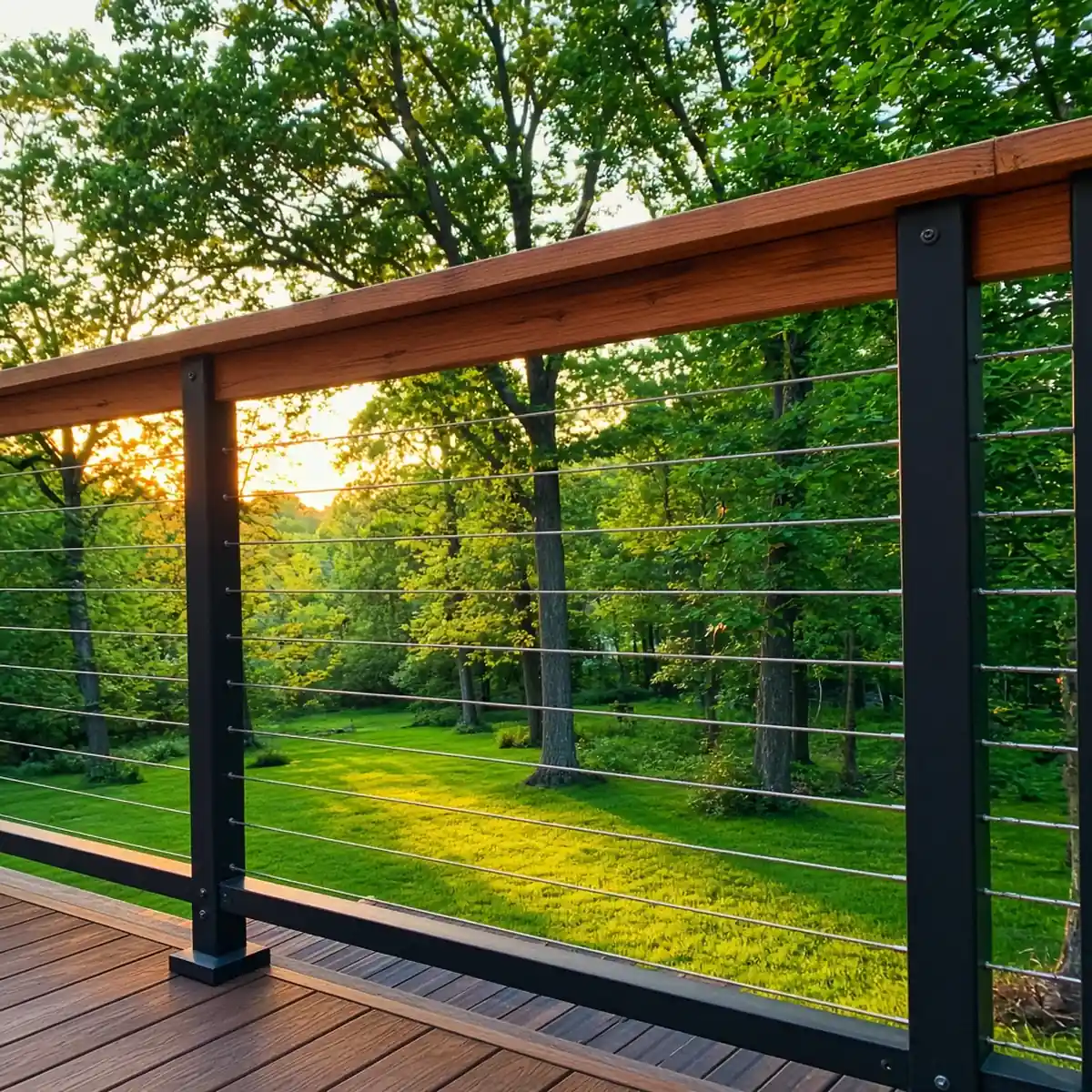
Material is where the choices open up. Pressure-treated or cedar wood railing matches a wood deck and takes stain. Composite railing matches a composite surface and skips the refinishing. Aluminum and metal railing give thin sightlines and resist rust when powder-coated. Cable railing runs stainless lines for a near-invisible view, popular where a deck looks out on a yard or water. See composite decking for the matching surface. Call 763-298-9416.
Work is performed by independent professionals.
How Deck Railing Installation Works
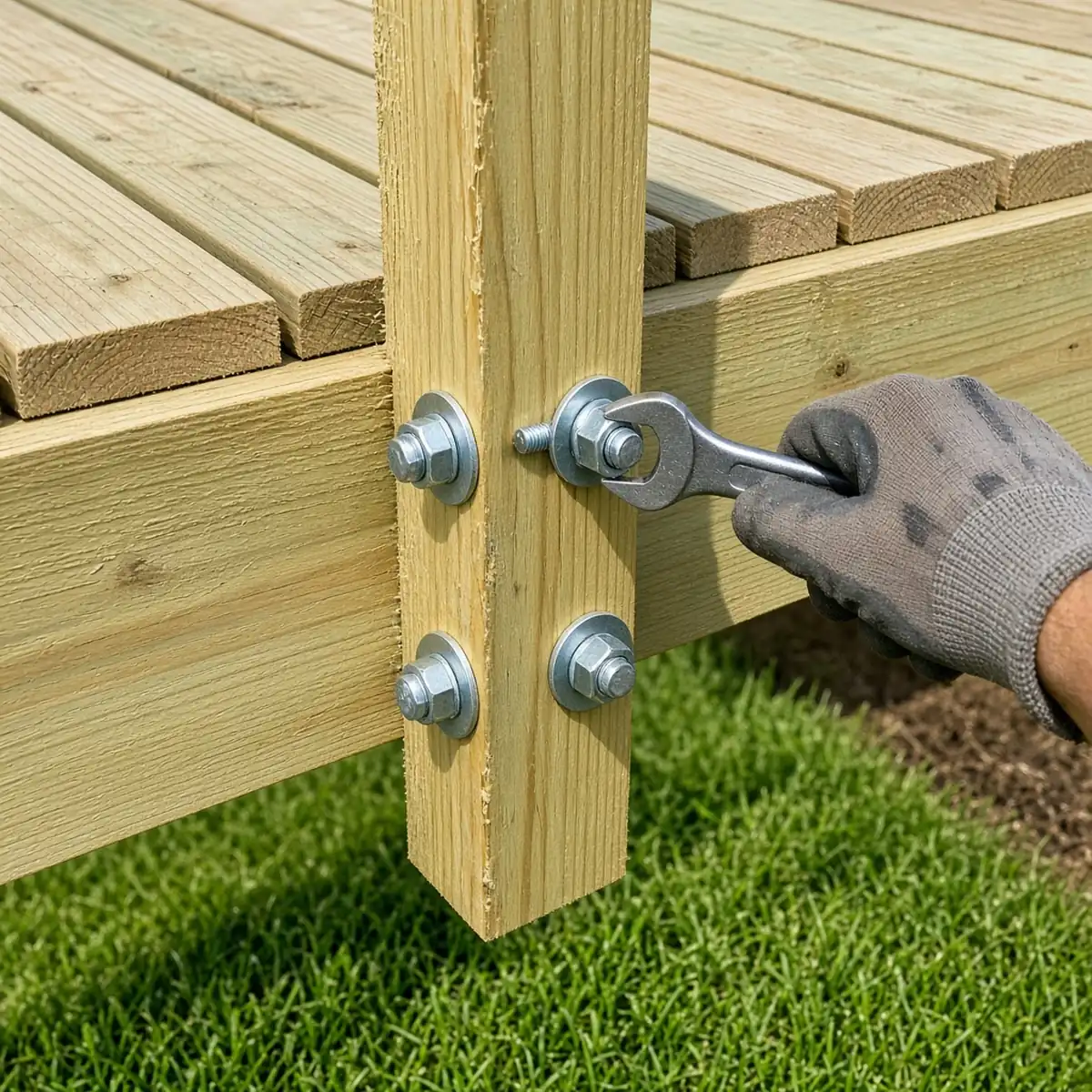
Deck railing installation works from the posts outward, because the posts carry the load. First, the posts are anchored to the deck frame with through-bolts or rated hardware, never screwed to the decking alone. Second, the top and bottom rails are set between the posts at the code height. Third, the balusters or cable infill are spaced so a 4-inch sphere cannot pass between them. Finally, the railing is load-checked, because a guard has to resist a push without flexing.
The post connection is the part that fails on a weak railing. A post lagged to the deck boards pulls loose under load; a post bolted through the rim or blocked into the frame holds. That connection is what makes a railing a guard instead of a handhold. Call 763-298-9416.
Why Maple Grove Decks Need Code-Height Railings
Maple Grove decks need code-height railings because the Minnesota Residential Code requires a guard on any walking surface more than 30 inches above grade, and many of the city's older decks predate the current standard. Many decks built in the 1980s or 1990s carry a railing that is too low, spaced too wide, or loose at the posts.
Winter adds a reason beyond code. Freeze-thaw movement and snow load work on old fasteners, so a railing that was tight years ago can wobble now. A railing upgrade brings the guard to 36 inches, closes the baluster gaps to the 4-inch limit, and re-anchors the posts to the frame. Call 763-298-9416.
What to Look for in a Railing Installer
A railing installer in Maple Grove should build the guard to hold a load, not just look right. Look for an installer who:
Those details are what the final inspection checks, and what keeps a guard safe under a lean. Call 763-298-9416 to reach a deck builder in Maple Grove.
Areas Served in Maple Grove
Deck railing work reaches homes across Maple Grove and nearby Hennepin County communities, including Osseo, Rogers, Dayton, Corcoran, Brooklyn Park, Plymouth, and Champlin. See service areas for the full list. Call 763-298-9416.
Frequently Asked Questions
A deck railing in Minnesota has to be at least 36 inches tall on any deck surface more than 30 inches above the ground, under the Minnesota Residential Code. Below that 30-inch threshold a guard is not required, though many homeowners add one anyway. The height is measured from the deck surface to the top of the rail, and the final inspection checks it along with the baluster spacing.
Deck balusters have to be spaced so a 4-inch sphere cannot pass between them, which works out to gaps under 4 inches. The rule applies to vertical balusters, cable infill, and any other guard pattern. On stairs the triangular opening at the tread has its own limit. The 4-inch rule exists to keep a small child from slipping through, and the inspection checks it across the whole run.
The best railing material depends on the look and the upkeep a homeowner wants. Powder-coated aluminum resists rust and holds up through freeze-thaw with little maintenance. Composite railing matches a composite deck and skips refinishing. Cable railing gives an open view but needs its lines tensioned to spec. Wood railing matches a wood deck and costs less but needs staining like the deck surface.
A railing can be replaced on its own if the deck frame and the posts' anchor points are sound. The new posts anchor to the rim joist or framing, so the installer checks that the frame can hold the load before setting them. If the deck itself is heaving or rotted, the railing is only part of the problem, and a deck repair or replacement addresses the structure first.
A standalone railing replacement does not always trigger a full deck permit on its own, but any work tied to a larger deck repair or rebuild does, and Maple Grove reviews deck work under the 2020 Minnesota Residential Code. Because the rules turn on the scope of the work, a builder confirms with the city's Building Inspection Services whether a given railing job needs a permit before starting.
Call Now for Deck Railings in Maple Grove
For deck railings in Maple Grove, MN built to the 36-inch guard code, call 763-298-9416. See deck builders in Maple Grove for the full range of deck work. Call 763-298-9416.