
Signs Your Maple Grove Deck Needs Repair or Replacement
A Maple Grove deck signals trouble first at the footings, the ledger, and the frame, long before the surface boards look bad. Seasonal movement points to frost heave; soft, spongy wood points to rot; a gap at the house points to a failing ledger. With much of the city's housing built from the 1980s through the 1990s, a large share of local decks are now 30 to 40 years old and showing these signs. Here is what to watch for and whether each one calls for repair or replacement.
The Short Answer
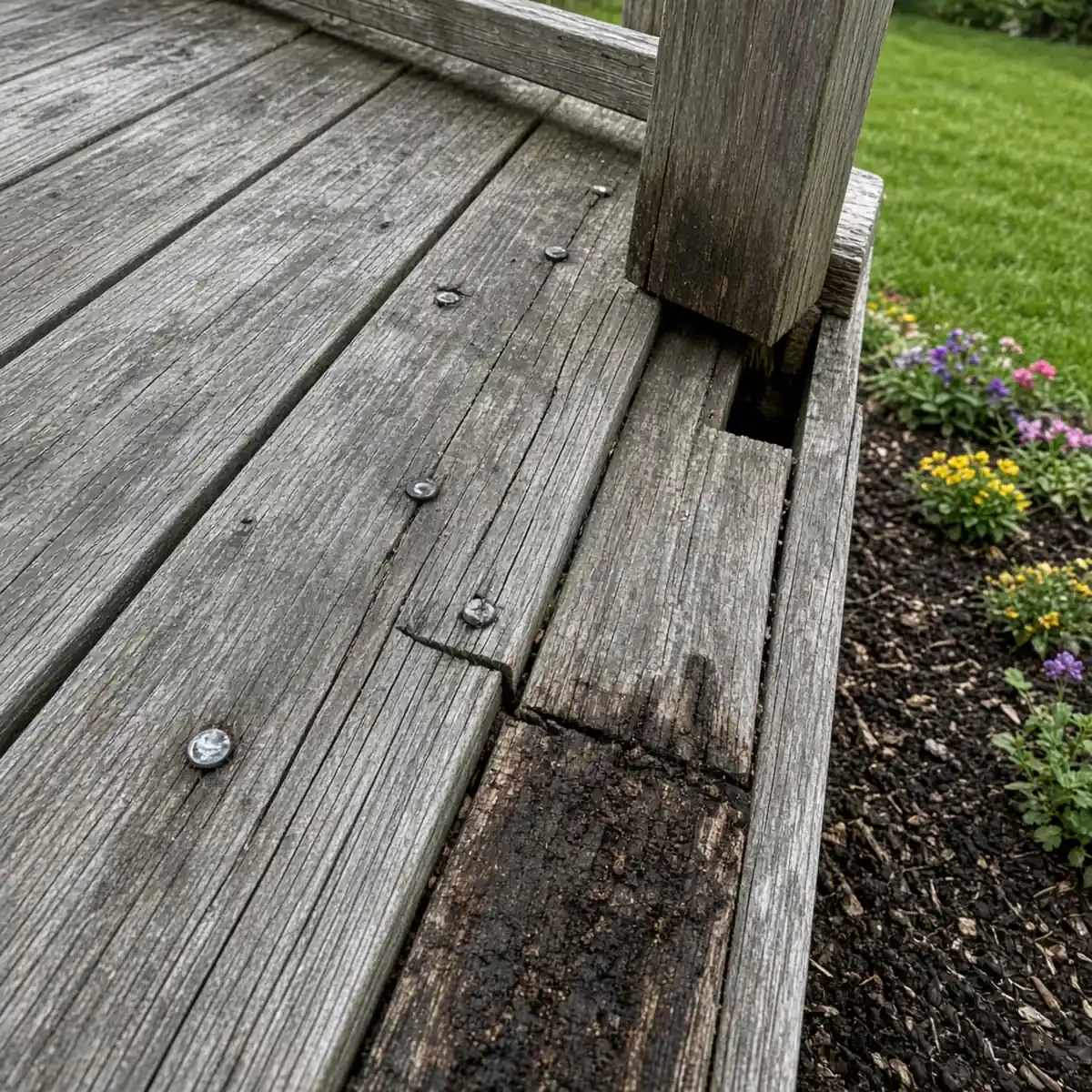
Check the footings, the ledger, and the frame first. If the deck moves with the seasons but the wood is solid, it is frost heave and the footings need re-pouring. If the wood is soft at the ledger, posts, or stairs, it is rot. A few bad boards or one heaved footing is a repair; widespread rot or shallow footings across the whole deck is a replacement. A deck more than 30 inches up with a loose or low railing is a safety issue to address now.
Signs That Point to Repair
These signs point to a repair, not a full rebuild, as long as the rest of the frame is sound:
Each of these is a contained problem. Re-pouring one footing below 42 inches, swapping bad boards, or re-securing a railing fixes the deck without rebuilding it. See how the work is done in deck repair.
Signs That Point to Replacement
These signs point to a deck that has reached replacement:
When the structure itself is failing, patching chases one problem after another. A rebuild on new 42-inch footings and current framing costs less effort over time. See deck replacement.
Signs That Mean Stop Using the Deck Now
Some signs are safety issues, not maintenance. A deck more than 30 inches above grade with a railing that moves under a push, a ledger visibly separating from the house, or framing that flexes or cracks underfoot should take people off it until a professional looks. A deck failure under load is sudden and dangerous, and the connections that fail, the ledger and the guard, are exactly the ones that show warning signs first. Call 763-298-9416.
Where to Look and When
The best time to check a Maple Grove deck is spring, after the frost has left the ground, because that is when heave and winter damage show. Look at the footings and posts for movement, probe the ledger and post bases for soft wood, push on the railing to test the guard, and check the boards near the stairs and the house where water collects. Catching a problem in spring leaves the season to fix it before the next winter's snow load lands on a weak frame. The frost and snow numbers behind all of this are in the Minnesota deck frost-depth and snow-load reference.
Frequently Asked Questions
A deck is a safety concern when it is more than 30 inches above grade and the railing moves under a push, when the ledger is separating from the house, or when the framing flexes or cracks underfoot. Those are the connections that fail suddenly under load. If any of them shows, keep people off the deck until a professional inspects it. Cosmetic issues like graying boards are not safety problems; loose structure and guards are.
Repair an old deck when the framing is sound and the problems are contained: a heaved footing, a few bad boards, a loose railing. Replace it when the framing is rotted in several places, the footings are too shallow across the deck, or more than a third of the structure needs work. A deck built in the 1980s or 1990s with original framing is frequently at the point where replacement costs less effort than ongoing repairs. An inspection settles it.
Deck rot looks like wood that is soft, spongy, darkened, or crumbling, and it hides where water sits: at the ledger behind the flashing, at the base of posts, under the bottom stair, and around fasteners. The surface can look fine while the wood underneath has failed, so probing with a screwdriver or awl reveals it. Soft wood that stays soft year-round is rot, as opposed to the seasonal movement of frost heave.
Many Maple Grove decks are failing now because much of the city was built from the 1980s through the 1990s, so a large share of its decks are 30 to 40 years old and reaching the end of the treated lumber's service life. On top of age, older decks sit on footings poured shallower than today's 42-inch standard, so they heave each winter. Age and frost together are why repair and replacement work is steady across the city.
Inspect a deck in Minnesota in spring, after the frost has gone out of the ground, because heaved footings and winter damage show then. Check the footings and posts for movement, probe the ledger and post bases for soft wood, test the railing, and look at the boards near the stairs and the house. A spring check leaves the whole building season to make repairs before the next winter's snow load.
Call Now to Check a Deck in Maple Grove
If your deck is showing any of these signs, call 763-298-9416 to reach a deck builder in Maple Grove. See deck repair, deck replacement, or deck builders in Maple Grove for the full range of work. Call 763-298-9416.